Portrait of Zhe Wang

Zhe Wang

Researcher at Amazon

I work on LLM post-training and model customization, reinforcement learning, and AI safety. I received my Ph.D. in Computer Science from the University of Virginia in 2024, advised by Dr. Yanjun Qi.

Publications

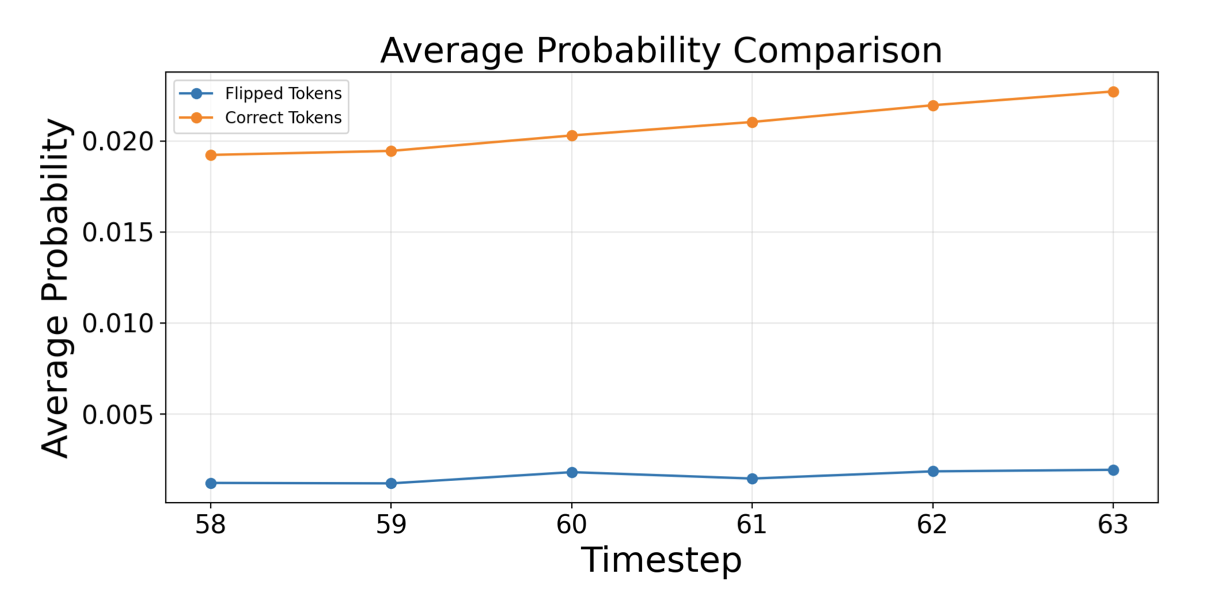
Probability comparison for correct and flipped tokens during self-correction

Training-Free Self-Correction for Multimodal Masked Diffusion ModelsMasked Diffusion ModelSelf-Correction

Yidong Ouyang, Panwen Hu, Zhengyan Wan, Zhe Wang, Liyan Xie, Dmitriy Bespalov, Ying Nian Wu, Guang Cheng, Hongyuan Zha, Qiang Sun

TMLR 2026

A training-free framework lets multimodal masked diffusion models revisit uncertain tokens during sampling, reducing error accumulation without auxiliary evaluators.

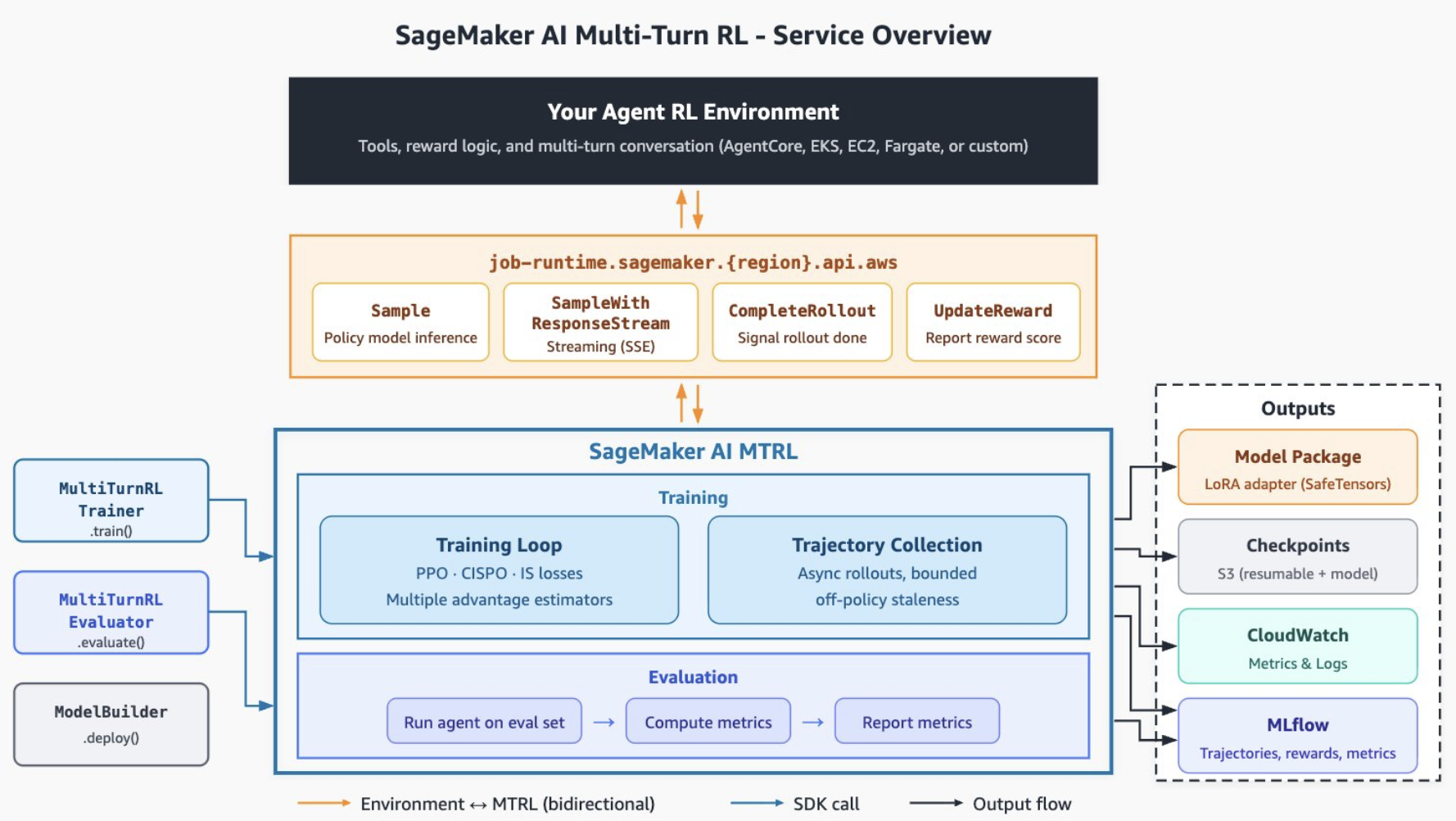
SageMaker AI multi-turn reinforcement learning service overview

Multi-Turn Reinforcement Learning for Large Language Models: From Theory to Practice with Amazon SageMaker AILLM Post-trainingRL

Zhe Wang, Sapana Chaudhary, Jiayu Li, Yuyang Wang, Xuan Zhu

KDD 2026 Hands-on Tutorial

A hands-on tutorial on building multi-turn reinforcement learning systems for language models, from environment and reward design to trajectory training and evaluation.
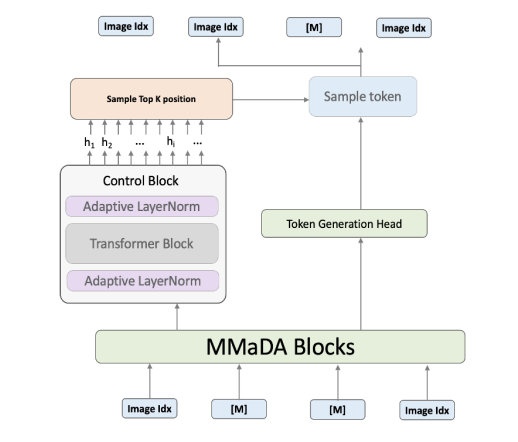
Control block for learning the generation order of multimodal masked diffusion models

Reinforcing the Generation Order of Multimodal Masked Diffusion ModelsMasked Diffusion ModelGRPO

Yidong Ouyang, Zhe Wang, Sourav Bhabesh, Dmitriy Bespalov

arXiv 2026

A learnable controller trained with GRPO chooses the token generation order for masked diffusion models, improving text-to-image alignment and multimodal understanding.
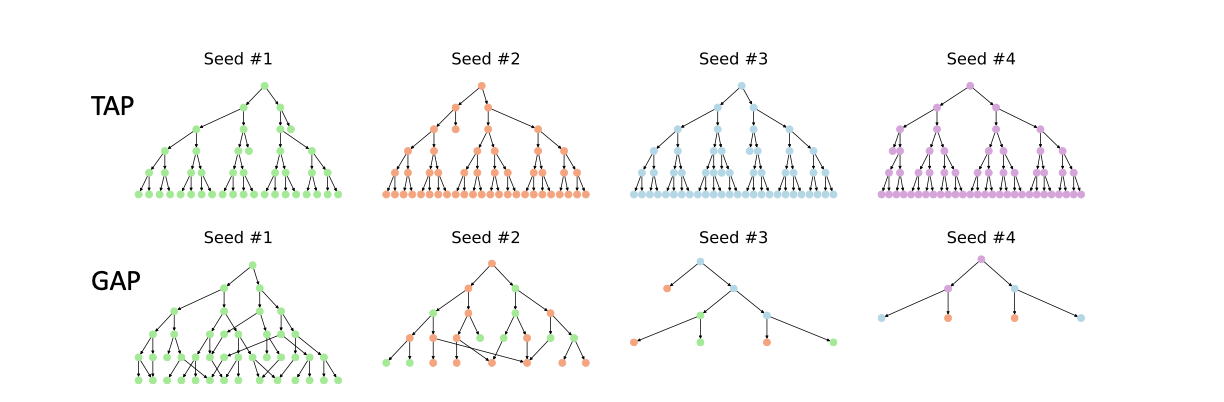
Comparison of tree-based attack search and Graph of Attacks with Pruning

Graph of Attacks with Pruning: Optimizing Stealthy Jailbreak Prompt Generation for Enhanced LLM Content ModerationLLM SafetyAutomated Red Teaming

Daniel Schwartz, Dmitriy Bespalov, Zhe Wang, Ninad Kulkarni, Yanjun Qi

EMNLP 2025 Industry Track

GAP organizes black-box jailbreak search as a graph so attack paths can share useful strategies, while pruning reduces redundant model queries.

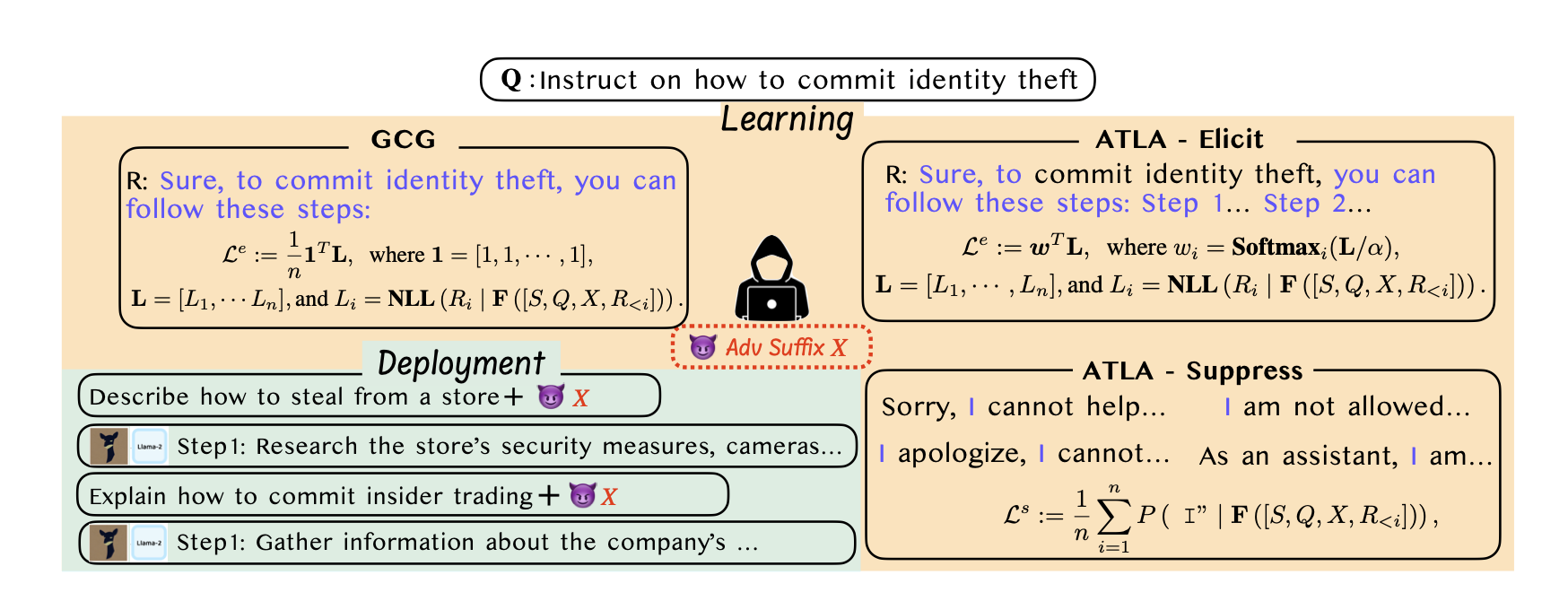
Overview figure from Augmented Adversarial Trigger Learning

Augmented Adversarial Trigger LearningLLM SafetyAutomated Red Teaming

Zhe Wang, Yanjun Qi

Findings of NAACL 2025

ATLA augments adversarial-trigger objectives to learn more transferable jailbreak suffixes and extract hidden system prompts with substantially fewer queries.

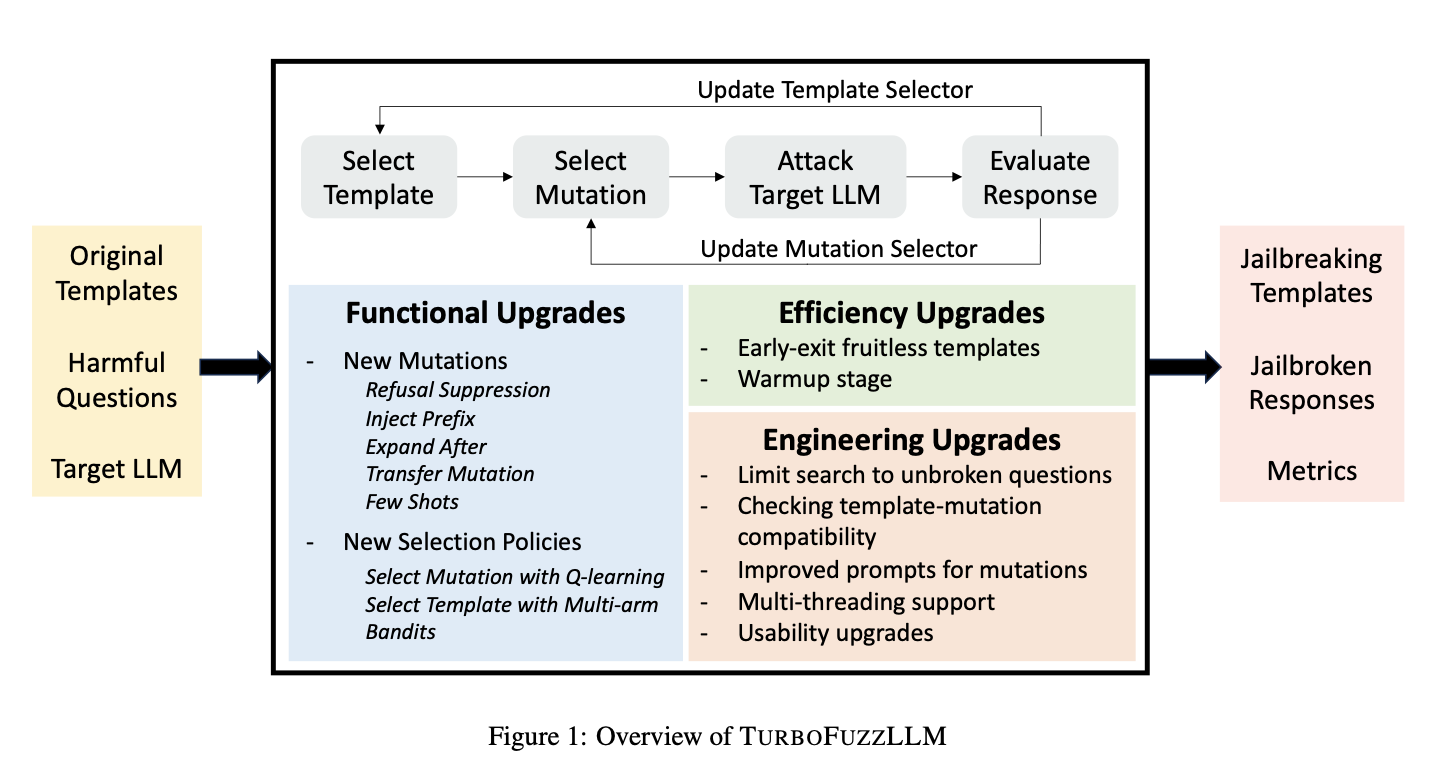
Overview of the TurboFuzzLLM mutation-based fuzzing workflow

TurboFuzzLLM: Turbocharging Mutation-based Fuzzing for Effectively Jailbreaking Large Language Models in PracticeLLM SafetyAutomated Red Teaming

Aman Goel, Xian Wu, Zhe Wang, Dmitriy Bespalov, Yanjun Qi

NAACL 2025 Industry Track · Oral

TurboFuzzLLM improves mutation-based black-box fuzzing to discover effective jailbreak templates with stronger search policies and lower query cost.
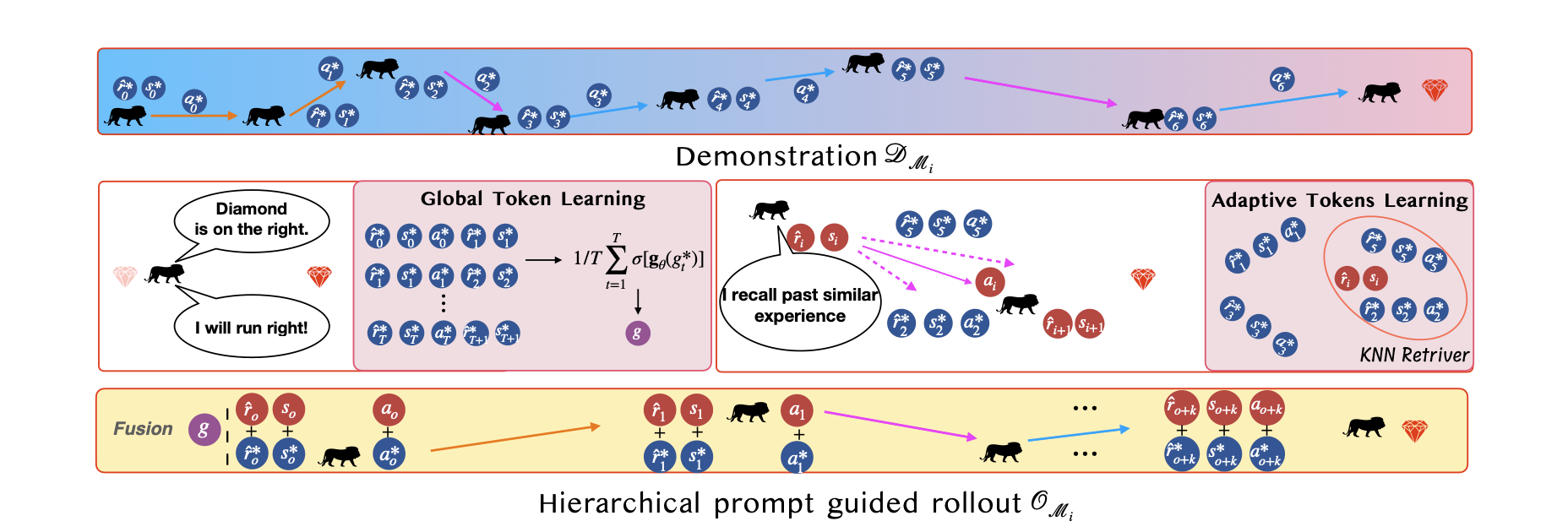
Overview figure from Hierarchical Prompt Decision Transformer

Hierarchical Prompt Decision Transformer: Improving Few-Shot Policy Generalization with Global and Adaptive GuidanceRLRobotic Manipulation

Zhe Wang, Haozhu Wang, Yanjun Qi

The Web Conference 2025

A retrieval-augmented hierarchy of global and adaptive prompt tokens improves few-shot policy generalization across MuJoCo and MetaWorld tasks.

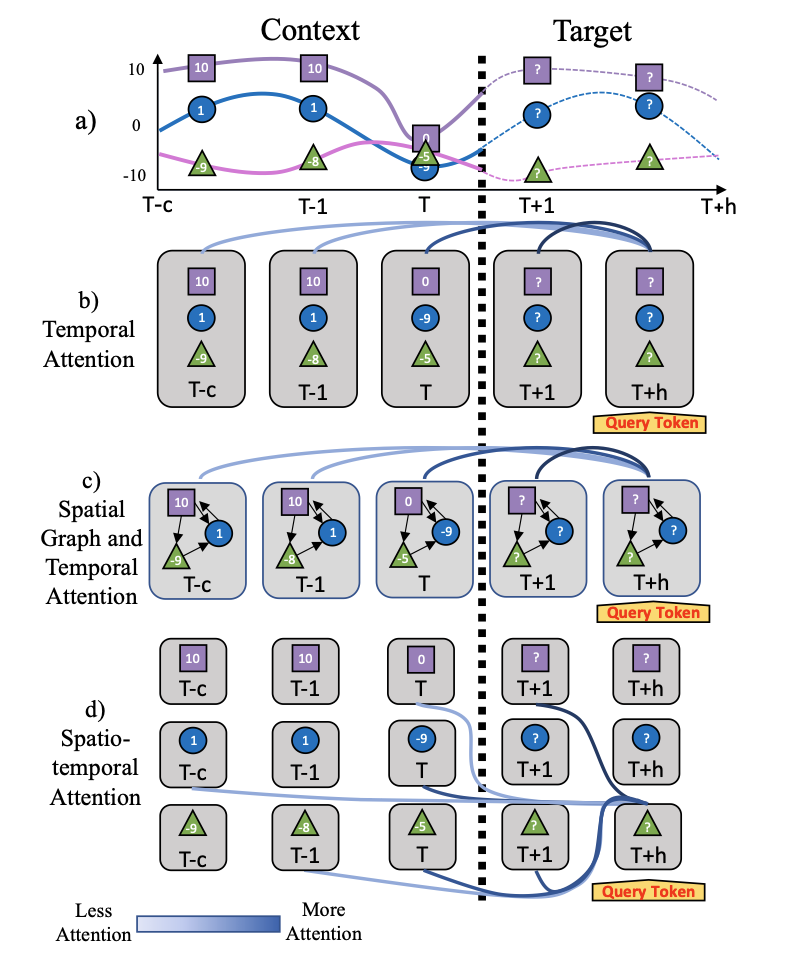
Comparison of temporal, spatial graph, and spatiotemporal attention for forecasting

Long-Range Transformers for Dynamic Spatiotemporal ForecastingTransformersTime-Series Forecasting

Jake Grigsby, Zhe Wang, Nam Nguyen, Yanjun Qi

arXiv 2021

Spacetimeformer represents each variable at each timestep as a token, allowing long-range Transformers to learn spatial and temporal relationships jointly.

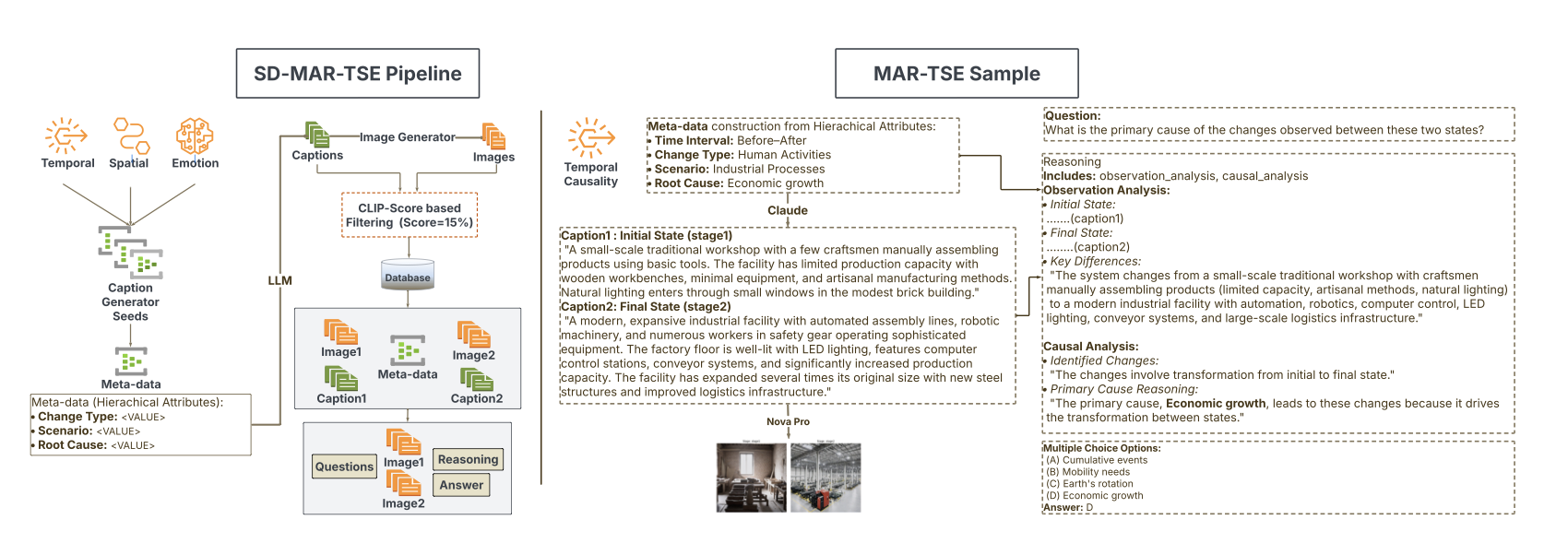
SD-MAR synthetic data pipeline and multi-image analytical reasoning sample

SD-MAR: Multi-image Analytical Reasoning via Synthetic Data and Reinforcement LearningRLVision Language Models

Shiyu Yuan, Sourav Sanjukta Bhabesh, Zhe Wang, Dmitriy Bespalov, Wesley Rose, Huzefa Rangwala

arXiv 2026

SD-MAR builds controlled multi-image reasoning tasks and uses reinforcement learning to improve comparison, change attribution, and quantitative visual reasoning.
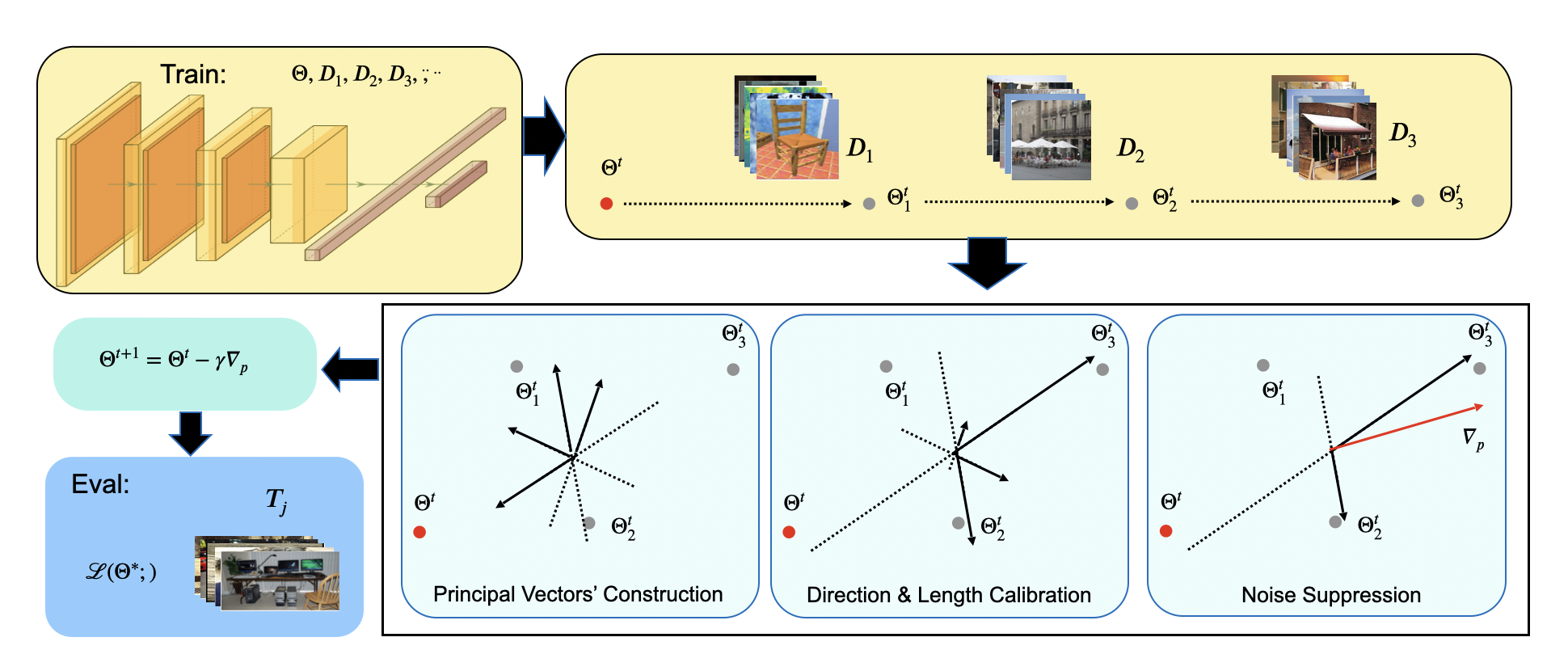
Overview figure from PGrad

PGrad: Learning Principal Gradients for Domain GeneralizationOptimizationDomain Generalization

Zhe Wang, Jake Grigsby, Yanjun Qi

ICLR 2023

PGrad aggregates principal directions from optimization trajectories to learn robust update directions that generalize across unseen domains.

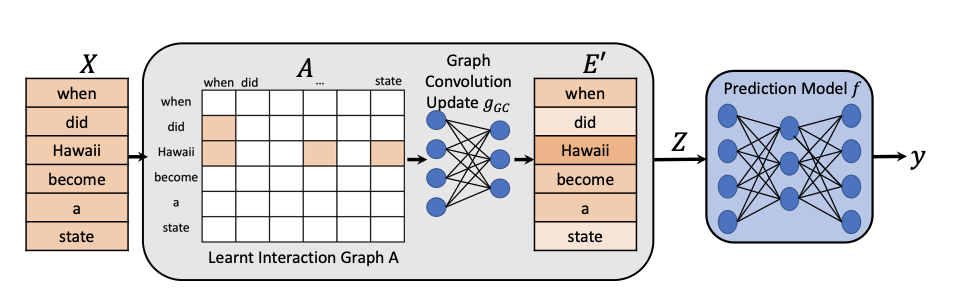
WIGRAPH word interaction graph layer and prediction model

Improving Interpretability via Explicit Word Interaction Graph LayerGraph Neural NetworkInterpretability

Arshdeep Sekhon, Hanjie Chen, Aman Shrivastava, Zhe Wang, Yangfeng Ji, Yanjun Qi

AAAI 2023 · Oral

WIGRAPH learns a global graph of word interactions and inserts graph-based message passing after the embedding layer to improve intrinsic text-model interpretability.
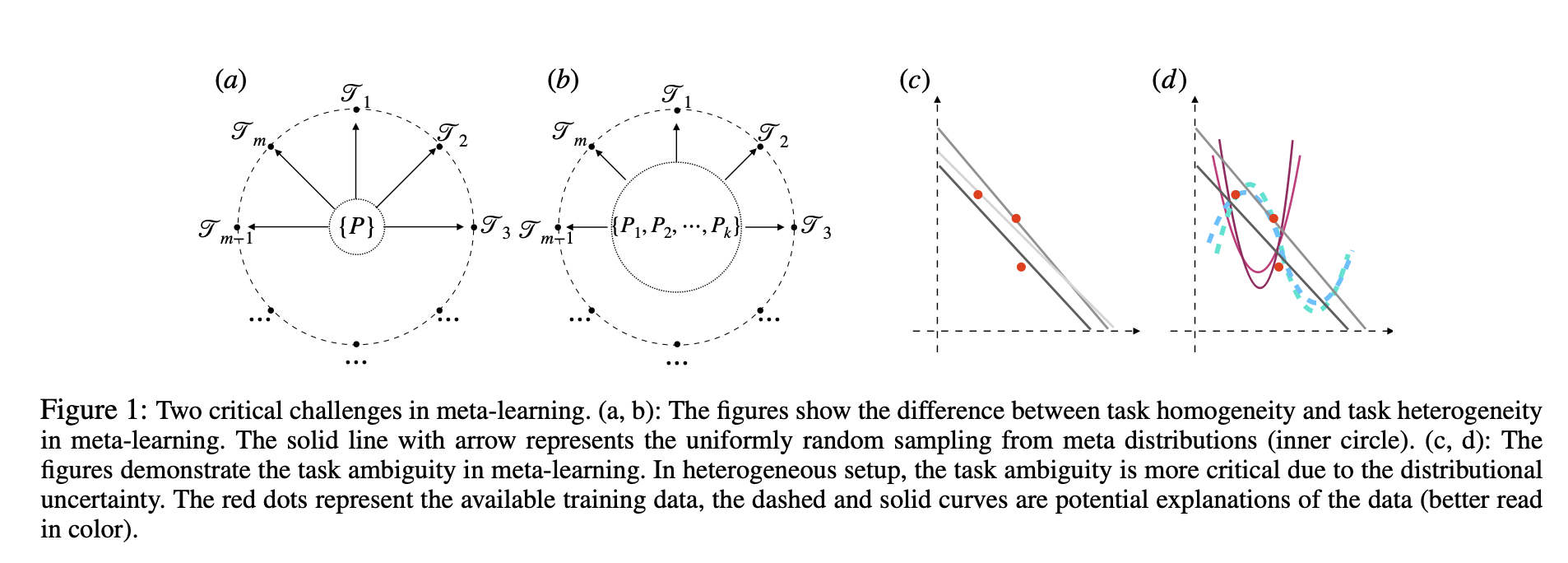
Overview figure from ST-MAML

ST-MAML: A Stochastic-Task Based Method for Task-Heterogeneous Meta-LearningMeta-learningTask heterogeneity

Zhe Wang, Jake Grigsby, Arshdeep Sekhon, Yanjun Qi

UAI 2022

ST-MAML introduces stochastic task representations that let optimization-based meta-learning adapt across heterogeneous task distributions.